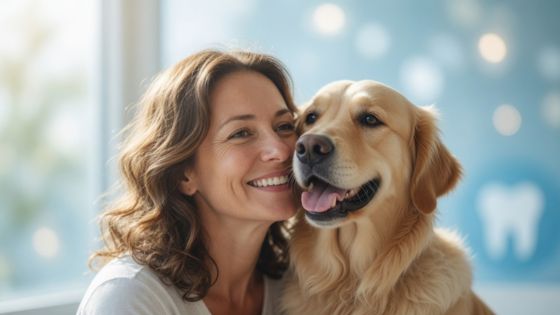
Medical History Mysteries recently tackled one of the most divisive questions in pet-loving households: Should you kiss your dog on the mouth? As dentists, we hear this topic come up more often than you might think — so let’s break it down.
Two Camps, One Question
Some people are enthusiastic dog kissers. Others find the idea completely disgusting. If you’re on Team Dog Kisses, you’re in good company — many of our patients (and even some of our team members) admit to giving their pups plenty of affection.
But is it actually safe for your oral health?
The Pros: Our Long Relationship with Dogs
Humans and dogs have lived together for thousands of years. Some research suggests this close bond may have positively influenced our microbiomes. Over time, the “intermingling” with dogs may have helped introduce beneficial bacteria that crowd out more harmful ones.
In short, for many healthy adults, occasional dog kisses may not be as risky as they sound.
The Cons: What’s Really in That Slobber?
Dog saliva isn’t sterile. It can contain bacteria such as Pasteurella, Salmonella, and others that are known to cause infections — especially if they enter through a cut or surgical site.
More relevant to dentistry: some bacteria commonly found in a dog’s mouth have been linked to periodontal disease in humans. Additionally, dogs tend to lick all sorts of questionable things (toilet bowls, garbage, puddles, etc.), which can introduce new bacteria into your mouth.
Real patient story: One periodontist shared a case where a patient allowed her dog to lick her surgical site after gum surgery, believing it would promote healing. It did not end well. In some cultures, dog saliva has traditionally been viewed as medicinal — but modern dentistry strongly advises against it.
Who Should Be Extra Careful?
- Immunocompromised patients
- People taking medications that suppress the immune system
- Anyone with active gum disease or recent oral surgery
For these individuals, it’s best to minimize face-to-face contact with pets until the area has fully healed.
Practical Tips for Dog Lovers
You don’t necessarily have to stop kissing your dog — but here are some smart precautions:
- Maintain excellent dog dental hygiene — Brush your dog’s teeth regularly or use dental chews and bones that help reduce plaque.
- Watch what your dog licks before they lick you.
- Practice good hand and oral hygiene after playing with your pet.
- Be cautious after oral surgery or deep cleanings — keep those kisses away from healing areas.
The Bottom Line
For most healthy adults with good oral hygiene, the occasional dog kiss is probably low risk. However, it’s wise to practice moderation and keep both your mouth and your dog’s mouth as clean as possible.
Your oral health and your dog’s health are more connected than you might think!
Have questions about protecting your smile?
Schedule a dental checkup. We’re happy to answer any concerns about bacteria, gum health, or post-treatment care.
See Dr. Chris, your dentist in Fair Oaks. Call our office at (916) 966-4600.
- https://www.dentistryiq.com/dentistry/pharmacology/video/55363456/is-kissing-your-dog-bad-for-your-health
- https://www.youtube.com/watch?v=-ZtYxuB6Gtg&t=16s
- https://www.cbsnews.com/newyork/news/study-kissing-your-dog-can-transmit-disease/
- https://www.sciencedirect.com/science/article/abs/pii/S0001706X26002305